If you’ve seen splatters of honeydew on your deck or swarms of colorful insects on your trees, you’re likely dealing with spotted lanternflies, one of the fastest-spreading invasive pests in the U.S. Since their 2014 arrival in Pennsylvania, these destructive hoppers have expanded across the Mid-Atlantic and beyond, threatening grapevines, fruit trees, and ornamental plants. For homeowners, lanternfly pest control isn’t just about aesthetics: unchecked populations can weaken trees, attract mold, and create sticky messes on outdoor furniture and vehicles. The good news: with the right mix of mechanical removal, trapping, and chemical treatments, most DIYers can manage infestations without calling in the cavalry.
Table of Contents
ToggleKey Takeaways
- Spotted lanternfly pest control can be managed by most homeowners through mechanical removal, trapping, and targeted insecticide applications without professional help.
- Scraping egg masses into soapy water year-round, particularly from October through April, remains the most effective low-tech prevention method.
- Nymphs and adults can be controlled with insecticidal soaps, neem oil sprays, or pyrethroid-based residual insecticides applied to tree bark and resting surfaces.
- Removing tree of heaven or treating it as a trap tree with systemic insecticide eliminates the lanternfly’s preferred host and reduces infestation severity.
- Preventing future infestations requires inspecting vehicles and equipment for egg masses before travel, removing outdoor items from beneath trees, and coordinating control efforts with neighbors.
- Year-round monitoring from late March through November, combined with community reporting to local agricultural departments, helps keep spotted lanternfly populations below damaging levels.
What Is the Spotted Lanternfly and Why Is It a Threat?
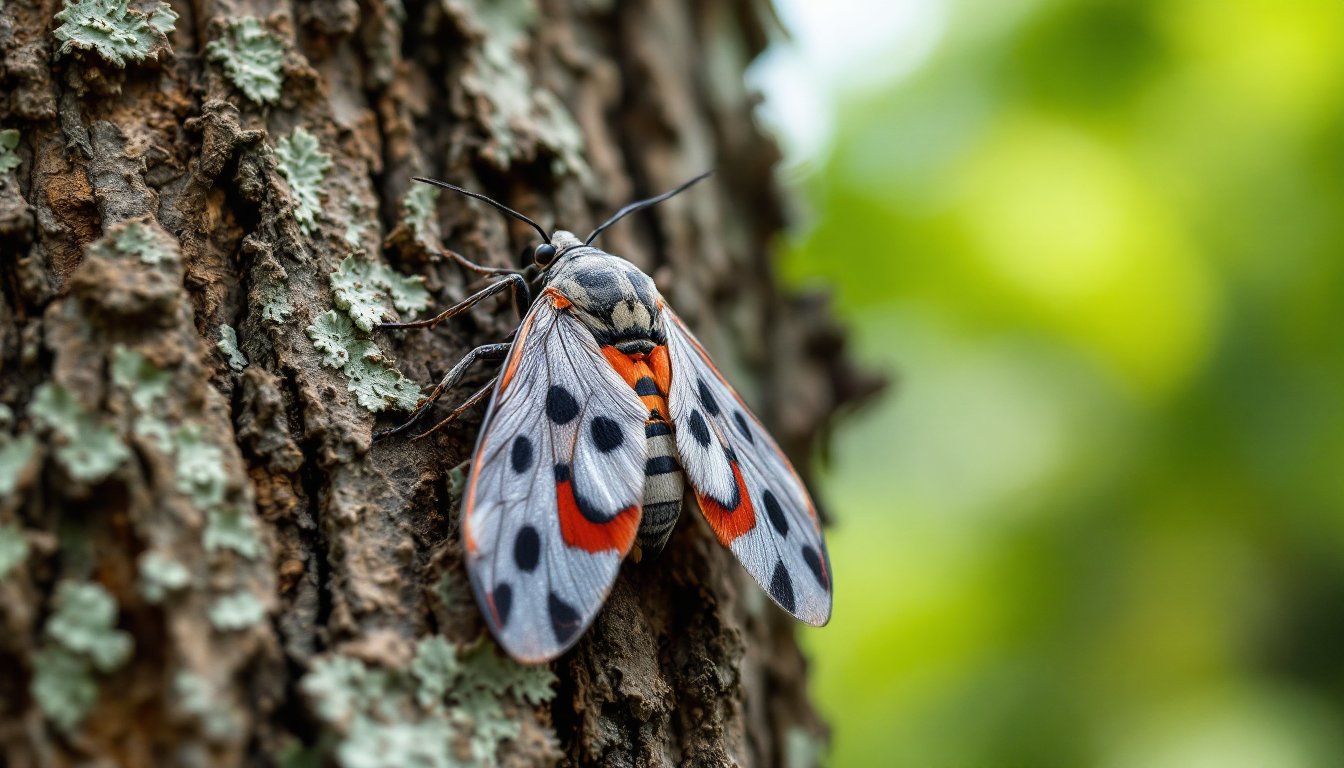
The spotted lanternfly (Lycorma delicatula) is a planthopper native to China and Southeast Asia. Adults measure roughly 1 inch long and sport distinctive gray wings with black spots: when they fly, you’ll catch flashes of bright red underwings edged in black and white.
These insects feed on plant sap using piercing-sucking mouthparts, weakening host plants and excreting copious amounts of sticky honeydew. That honeydew coats leaves, stems, and anything beneath the tree, fostering black sooty mold that blocks photosynthesis and attracts ants, wasps, and flies. While a few lanternflies won’t kill a mature oak, heavy infestations stress young trees and devastate high-value crops like grapevines, hops, and fruit orchards.
Spotted lanternflies also hitch rides on vehicles, shipping containers, and outdoor equipment, spreading egg masses hundreds of miles overnight. The USDA and state agriculture departments have issued quarantines in affected areas, but enforcement relies heavily on homeowner vigilance. If you live in Pennsylvania, New Jersey, Delaware, Maryland, Virginia, West Virginia, New York, Connecticut, Ohio, or Indiana, assume they’re already in your neighborhood or will be soon.
How to Identify Spotted Lanternflies on Your Property
Recognizing Adult Lanternflies
Adult spotted lanternflies emerge in late July and remain active until the first hard freeze, typically late November. Look for them clustered on tree trunks, particularly tree of heaven (Ailanthus altissima), their preferred host. Adults rest with wings folded tent-like over their backs, showing gray forewings speckled with black dots. When disturbed, they hop or flutter short distances, flashing crimson hind wings.
You’ll often find them on:
- Grapevines and fruit trees (apple, peach, cherry)
- Maples, birches, willows, and black walnuts
- Hardscape surfaces like siding, decks, and fences in late afternoon sun
They’re clumsy fliers, so adults tend to congregate rather than disperse evenly.
Spotting Egg Masses and Nymphs
Egg masses appear in late September through winter, laid on smooth surfaces: tree bark, patio furniture, grills, wheelbarrows, and even car bumpers. Each mass contains 30–50 eggs covered in a grayish-brown, putty-like coating that resembles smeared mud or old chewing gum. Older masses weather to a cracked, flaky appearance.
Nymphs hatch in late April to early May, passing through four instars:
- First through third instars (May–June): Tiny, 1/8 to 1/2 inch long, black with bright white spots.
- Fourth instar (July): Larger, 1/2 to 3/4 inch, developing red patches and white markings.
Check the undersides of leaves and the base of tree trunks at dawn, when nymphs congregate before dispersing to feed.
DIY Spotted Lanternfly Control Methods That Actually Work
Safety first: Wear nitrile gloves when handling egg masses and long sleeves when applying insecticides. If treating trees taller than 10 feet, use a sturdy extension ladder with a spotter, falls cause more injuries than pests.
1. Mechanical removal and trapping
Scraping egg masses remains the most effective low-tech method. Use a plastic putty knife or old credit card to scrape masses into a bucket of rubbing alcohol or soapy water (2 tablespoons dish soap per gallon). Don’t scrape onto the ground: eggs can survive freezing and hatch in spring. Destroy masses year-round, but focus efforts from October through April.
Circle traps work well on tree trunks. Homeowners often see success with simple garden barriers made from window screen, duct tape, and a collection jar. Wrap a 12-inch band of window screen around the trunk at chest height, taping only the top edge and angling the screen downward. Staple a plastic produce bag or jar below to catch hoppers that crawl upward. Inspect daily and dump captives into soapy water.
2. Insecticidal soaps and neem oil
For nymphs, insecticidal soap or neem oil sprays provide contact kill without broad-spectrum toxicity. Mix according to label directions (typically 2–5 tablespoons per gallon) and spray foliage to runoff in early morning or evening to avoid leaf burn. Reapply after rain. These products only kill on contact, so thorough coverage matters.
3. Residual insecticides
For heavier infestations, pyrethroid-based sprays (permethrin, bifenthrin, or cyfluthrin) offer longer residual action. Apply to tree bark, deck railings, and other resting surfaces following label rates, over-application harms beneficial insects and pollinators. Products labeled for ornamental tree and shrub care typically list spotted lanternfly.
Avoid spraying blooming plants or applying within 50 feet of vegetable gardens unless the product is labeled for edibles. Most pyrethroids carry a 30-day harvest interval for fruit trees.
4. Systemic treatments
For high-value trees, soil-applied systemic insecticides containing dinotefuran or imidacloprid translocate through the root system, killing sap-feeders for several months. These are sold as granular or liquid drenches: apply in early spring before bud break for best uptake. Read the label carefully, some formulations require licensed applicator certification.
Systemics spare pollinators if applied before bloom, but they’re not instant. Expect 3–6 weeks for full translocation in a mature tree.
5. Host tree management
Tree of heaven acts as a magnet for lanternflies. Some extension services recommend a “trap tree” strategy: leave one or two trees of heaven, treat them with systemic insecticide, and remove all others. The treated trees lure and kill lanternflies while you eliminate alternative hosts. If you choose full removal, cut trees at ground level, immediately paint stumps with triclopyr-based herbicide (like Garlon or Brush-B-Gon), and monitor for resprouts monthly. Tree of heaven resprouts aggressively, so follow-up is non-negotiable.
Never burn or chip tree of heaven on-site: the smoke and chips can spread seeds and root fragments.
When to Call a Professional Pest Control Service
Most residential lanternfly problems yield to DIY methods, but certain situations warrant professional help:
- Orchards, vineyards, or commercial landscapes: Large-scale infestations require calibrated sprayers, adjuvants, and pesticide rotation strategies to prevent resistance.
- Trees over 20 feet or near power lines: Licensed pest control operators carry liability insurance and proper equipment for aerial applications.
- Persistent reinfestation from neighboring properties: Professionals can coordinate area-wide treatments and provide documentation for local quarantine compliance.
- If you lack time or mobility for weekly monitoring: Lanternfly control demands consistent scouting from April through November.
Expect to pay $150–$400 for a single residential treatment, or $300–$800 for seasonal programs including multiple visits and systemic applications. Pricing varies by region, property size, and tree count. Ask whether the service includes follow-up inspections and what their re-treatment policy covers.
Some municipalities and extension offices offer free egg-scraping workshops and loaner equipment. Contact your county’s cooperative extension or state department of agriculture for local resources.
Preventing Future Spotted Lanternfly Infestations
Inspect vehicles and equipment before travel. Egg masses cling to car bumpers, trailers, lawn mowers, and grills. Perform a walk-around before leaving quarantine zones, especially from September through May.
Remove outdoor items from under trees. Furniture, grills, and toys become egg-laying sites. Store them in sheds or garages during fall, or cover with tight-fitting tarps.
Plant resistant species. While lanternflies feed on many plants, they show strong preference for tree of heaven, grapevines, and certain maples. Diverse plantings with native species like oak, hickory, and dogwood reduce attractiveness. For seasonal landscape planning, consult your extension office’s recommended plant list.
Maintain healthy trees. Well-watered, fertilized trees tolerate feeding damage better than stressed specimens. Follow proper pruning practices, wounded bark offers easy feeding sites.
Join local reporting networks. Many states operate spotted lanternfly tracking apps or online portals. Reporting sightings helps agricultural officials predict spread and allocate resources. In some quarantine zones, failure to report or control infestations on commercial property carries fines.
Educate neighbors. Lanternflies don’t respect property lines. Share effective pest management strategies at HOA meetings or neighborhood groups. Coordinated control across multiple yards dramatically improves results.
Monitor year-round. Don’t assume winter kills everything. Egg masses survive temperatures well below zero. Mark your calendar for late March to start scouting, and keep a scraper and soapy water bucket handy through April.
Spotted lanternflies won’t vanish overnight, but persistent mechanical control, targeted treatments, and community cooperation keep populations below damaging thresholds. Most homeowners find that an hour of weekly monitoring during peak season prevents the need for expensive professional treatments down the line.