Carpenter ants don’t just show up, they move in, set up shop, and start eating your house from the inside out. Unlike termites, they don’t consume wood: they excavate it to build their nests, leaving behind hollow galleries that compromise structural integrity. A single mature colony can house thousands of workers tunneling through studs, joists, and sill plates while you sleep. Homeowners who catch an infestation early can handle it with DIY methods, but those who wait often face costly repairs and professional intervention. This guide walks through identification, treatment, and prevention strategies that actually work.
Table of Contents
ToggleKey Takeaways
- Carpenter ant pest control requires early detection through signs like frass piles, rustling sounds, and hollow-sounding wood to prevent costly structural repairs that can exceed $2,000.
- Unlike termites, carpenter ants excavate smooth galleries in wood to build nests rather than consume it, making them dangerous to load-bearing members like joists and sill plates.
- Effective DIY carpenter ant control involves locating nests by following worker trails with honey or tuna baits, then treating with boric acid baits, diatomaceous earth, or liquid insecticides costing $50 to $150 in materials.
- Professional pest control services become necessary when multiple satellite colonies are present, structural damage is extensive, or DIY treatments fail after six weeks of application.
- Prevention of carpenter ant infestations centers on eliminating moisture sources, maintaining wood-to-ground clearance, sealing entry points, and reducing food sources to make your home less attractive to colonies.
What Are Carpenter Ants and Why Are They a Problem?
Carpenter ants (Camponotus species) are large ants, typically 1/4 to 5/8 inch long, that range from black to reddish-brown. Workers are polymorphic, meaning colony members vary in size, with major workers (soldiers) noticeably larger than minors. They have a single node between the thorax and abdomen and a smooth, rounded thorax profile when viewed from the side.
These ants don’t eat wood. Instead, they excavate smooth galleries and tunnels to create nesting space, preferring wood that’s already softened by moisture or decay. Favorite targets include:
- Sill plates and rim joists where foundation meets framing
- Window and door headers with water intrusion
- Roof sheathing near leaky flashing
- Porch columns and deck posts in contact with soil
A parent colony can take three to six years to mature, eventually producing winged reproductive swarmers that establish satellite colonies in nearby structures. The structural risk isn’t immediate catastrophic failure, it’s cumulative. Years of tunneling weaken load-bearing members, and by the time frass (sawdust-like debris) becomes visible, damage is often extensive. Repairs can run into thousands of dollars if floor joists or wall studs need sistering or replacement.
Signs of a Carpenter Ant Infestation in Your Home
Catching carpenter ants early saves money and structural headaches. Look for these telltale indicators:
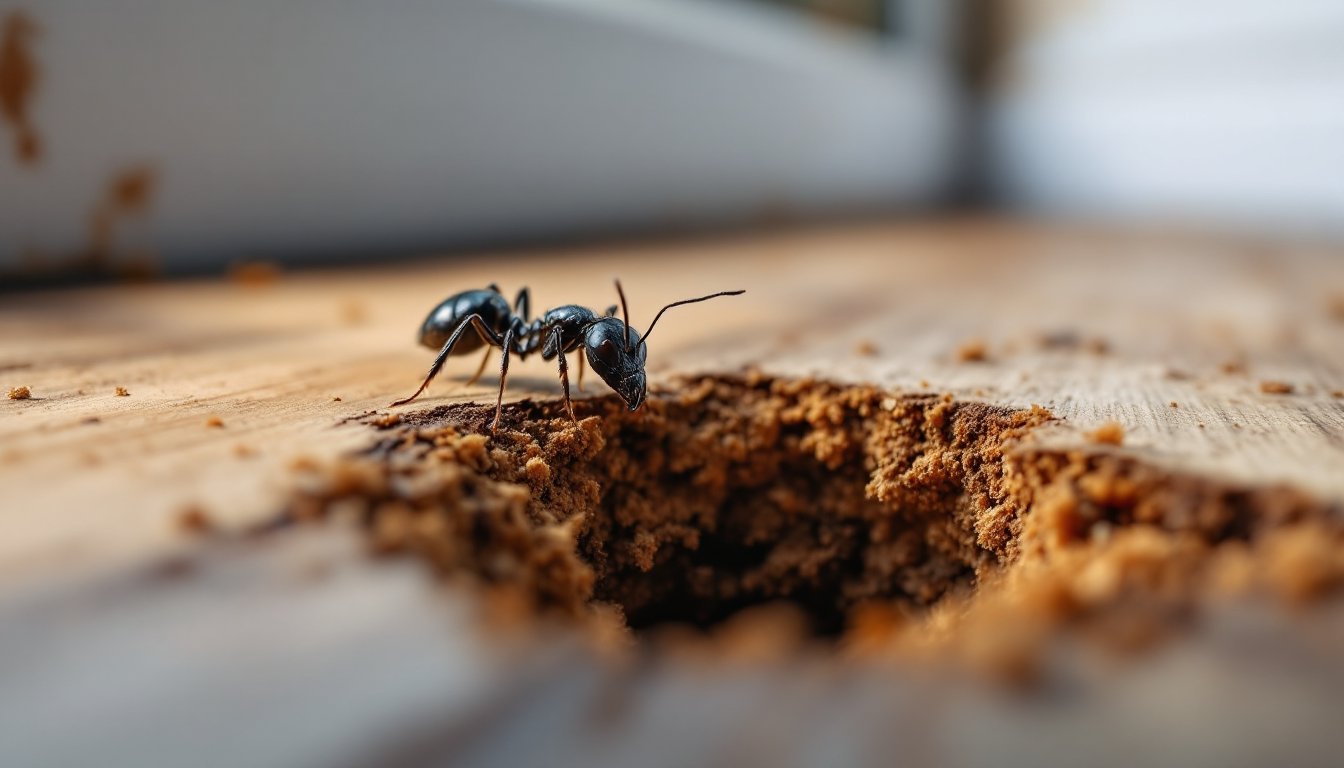
Frass piles: Unlike termite pellets, carpenter ant frass resembles fine sawdust mixed with insect body parts and soil. It accumulates below exit holes, often in corners or along baseboards.
Rustling sounds: Active colonies produce faint rustling or crinkling noises inside walls, especially at night when workers are most active. Press your ear to suspect walls after dark.
Winged swarmers indoors: Reproductive ants emerging inside the home between March and July indicate an interior nest, not just foraging visitors. They’re often mistaken for termite swarmers, but carpenter ants have elbowed antennae, pinched waists, and unequal wing lengths.
Worker trails: Foraging ants follow scent trails between nests and food sources. Common routes include foundation sills, utility penetrations, and tree branches touching the roof. Scout ants appear in kitchens and bathrooms seeking moisture and protein.
Hollow-sounding wood: Tap suspect framing members with a screwdriver handle. Excavated wood produces a hollow thud instead of a solid knock. Probe gently with a flathead screwdriver: compromised wood will sink easily.
Homeowners managing boric acid treatments for other pests often discover carpenter ant activity during inspections.
How to Find Carpenter Ant Nests
Locating the nest separates successful treatment from wasted effort. Carpenter ants establish parent colonies in exterior wood and satellite colonies indoors, so you may be dealing with multiple nests.
Follow the scouts: After sunset, place small dabs of honey or tuna on index cards near areas with activity. Worker ants will feed and return to the nest. Follow them with a flashlight, they’ll lead you within 10 to 15 feet of the colony.
Check moisture-prone areas first: Inspect crawl spaces, attics, and basements with a moisture meter. Readings above 20% moisture content in wood indicate conditions carpenter ants prefer. Focus on:
- Bath traps and subfloor around toilets
- HVAC condensate drain pans
- Roof valleys and chimney flashing
- Plumbing penetrations through rim joists
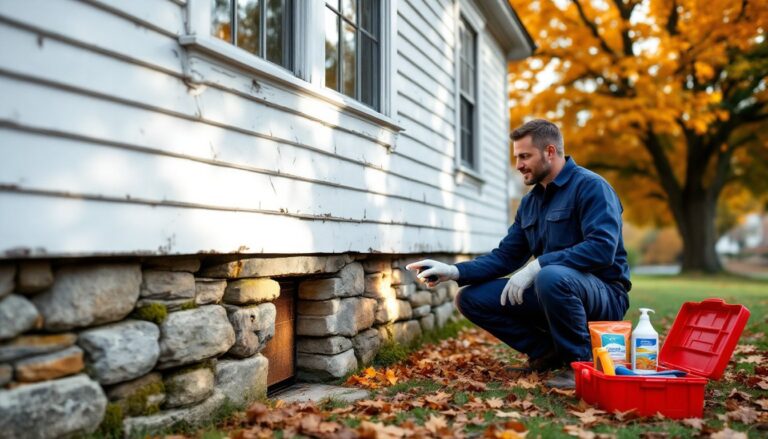
Exterior inspection: Walk the perimeter looking for ant highways on foundation walls, under siding, and along landscaping timbers. Check firewood stacks, tree stumps, and fence posts within 100 yards of the house. Tap hollow porch columns and deck posts, active nests often produce an immediate scatter of workers.
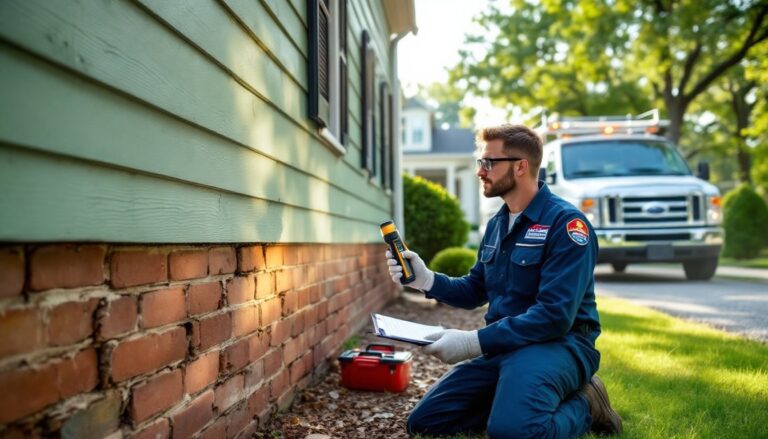
Use sound detection: Professional pest control operators use electronic listening devices, but a mechanic’s stethoscope works in a pinch. Press it against suspect walls during evening hours when colonies are most active. Many certified pest control services include thermal imaging for nest location.
DIY Carpenter Ant Control Methods That Actually Work
Once you’ve located the nest, treatment options range from natural deterrents to chemical elimination. Success depends on targeting both foraging workers and the colony core.
Natural and Chemical Treatment Options
Diatomaceous earth (DE): Food-grade DE damages ant exoskeletons, causing dehydration. Apply a light dust using a bulb duster into wall voids, attic spaces, and crawl spaces where nests are suspected. Wear an N95 respirator, DE is non-toxic but irritates lungs. Reapply after rain or high humidity. DE works slowly over weeks, not days.
Boric acid baits: Mix 1 tablespoon boric acid powder with 1/2 cup sugar and enough water to form a syrup. Soak cotton balls and place them in jar lids near ant trails. Workers carry the toxin back to the colony, including the queen. Replace baits weekly. Keep away from kids and pets. According to research from Today’s Homeowner, boric acid remains one of the most effective DIY ant control methods when applied correctly.
Liquid insecticides: Non-repellent products like fipronil or imidacloprid allow ants to pass through treated areas and spread the chemical within the colony. Spray foundation perimeters, window casings, and door thresholds using a pump sprayer. Follow label instructions for dilution ratios, typically 0.06% to 0.12% active ingredient. Wear nitrile gloves and eye protection.
Dust insecticides: Borate-based dusts (Borax or Termidor Dust) persist longer than liquids in voids. Use a hand duster to apply into weep holes, electrical outlets (power off first), and drilled access holes in walls. Drill 1/8-inch holes at a 45-degree angle into hollow studs near baseboards, inject dust, then plug with wood filler.
Direct nest treatment: If you’ve exposed a nest in rotted wood or a tree stump, drench it with a liquid insecticide rated for carpenter ants. Remove and destroy infested wood, then replace with treated lumber. Repair the moisture source, replacing a leaky roof valley or regrading soil away from the foundation. Cost estimates vary, but materials for DIY treatment typically run $50 to $150, not counting structural repairs.
Homeowners dealing with other invasive species often explore regional services like pest control in Winston Salem for comparative methods.
Preventing Future Carpenter Ant Invasions
Treatment kills the current colony, but prevention keeps them from coming back. Carpenter ants need three things: moisture, wood access, and food. Cut off their resources.
Eliminate moisture sources:
- Install vapor barriers in crawl spaces (6-mil polyethylene minimum)
- Replace rotted sill plates, rim joists, and subflooring
- Extend downspouts at least 6 feet from the foundation
- Repair roof leaks and clean gutters quarterly
- Run exhaust fans during showers to reduce bathroom humidity
Remove wood-to-ground contact:
- Maintain 6 inches of clearance between soil and siding
- Replace landscape timbers with stone or composite materials
- Store firewood 20 feet from the house on a raised rack
- Remove tree stumps and buried wood debris from grading
Seal entry points:
- Caulk gaps around utility penetrations with polyurethane sealant
- Install door sweeps with 1/4-inch clearance or less
- Screen attic and foundation vents with 1/8-inch hardware cloth
- Trim tree branches to maintain 6-foot clearance from the roof
Reduce food sources:
- Store pantry goods in airtight containers
- Clean up pet food immediately after feeding
- Rinse recycling bins weekly
- Fix plumbing drips that create water sources
According to guidance from Angi, annual inspections cost $75 to $150 and catch problems before they escalate. Many homeowners bundle carpenter ant prevention with routine termite inspections. In urban markets, finding experienced providers through directories like pest control companies in Los Angeles helps match services to regional pest pressures.
When to Call a Professional Pest Control Service
Some infestations exceed DIY capabilities. Call a licensed professional if:
Multiple colonies are present: Satellite nests spread throughout the structure require comprehensive treatment that coordinates timing and chemical placement. Pros use truck-mounted spray rigs and commercial-grade insecticides not available to consumers.
Structural damage is extensive: If load-bearing members show significant tunneling, you need both an exterminator and a structural engineer or contractor. Repairs may require temporary shoring, sistering damaged joists, or replacing entire sill plates, work that requires permits in most jurisdictions per the International Residential Code (IRC).
Nests are inaccessible: Colonies inside wall voids, second-story eaves, or cathedral ceilings often need drilling, injection, and wall removal that’s best handled by insured professionals. They carry $1 million liability coverage as standard.
DIY treatment fails: If you’ve treated for six weeks without reducing activity, the colony may be larger or more dispersed than initially assessed. Professionals use HomeAdvisor-vetted services to identify colonies with borescopes, thermal cameras, and acoustic detectors.
Cost considerations: Professional carpenter ant treatment ranges from $250 to $1,500 depending on colony size, accessibility, and follow-up visits. Many companies offer annual service contracts that include monitoring and retreatment. Compare that against the cost of reframing a rotted floor system, which starts at $2,000 for materials and labor.
Reputable services operate like providers featured in dedicated pest control directories, with transparent pricing, licensed applicators, and warranties. Don’t hire anyone who won’t provide proof of insurance, pesticide applicator licenses (required in all 50 states), and a written treatment plan.