Hornets aren’t just a backyard nuisance, they’re aggressive defenders of their territory, capable of multiple stings that can turn a simple garden task into a trip to urgent care. Unlike honeybees, which die after stinging once, hornets can attack repeatedly, releasing alarm pheromones that summon the entire colony. For homeowners, understanding the difference between a minor wasp problem and a dangerous hornet infestation is the first step toward safe, effective control. This guide walks through identification, removal options, and prevention strategies that actually work.
Table of Contents
ToggleKey Takeaways
- Hornets can sting multiple times and release alarm pheromones that alert the entire colony, making hornet pest control essential for safety.
- Identify hornet nests by their smooth, gray or tan papery exterior with a single entrance hole, commonly found in eaves, tree cavities, attics, and dense shrubs.
- DIY hornet removal is safe only for small nests under tennis-ball size in accessible outdoor areas, treated at dawn or dusk with aerosol sprays containing pyrethroids.
- Call a professional exterminator for nests larger than a softball, locations inside your home, or if you have a sting allergy, as costs range from $150 to $400.
- Prevent future infestations by sealing entry points, eliminating food sources, removing old nests, maintaining landscaping, and setting early-season traps in spring before queens establish colonies.
Understanding Hornets and Why They’re Dangerous
Hornets are large, social wasps that belong to the genus Vespa, with the European hornet (Vespa crabro) and the invasive Asian giant hornet (Vespa mandarinia) being the most common threats in North America. Unlike solitary wasps, hornets build paper-like nests that house colonies of 100 to 700 workers by late summer.
The primary danger comes from their aggressive defense behavior. Hornets defend a perimeter around their nest, typically 10 to 15 feet, and will attack anything they perceive as a threat. Their stings inject venom containing acetylcholine and histamine, causing sharp pain, swelling, and in some cases, allergic reactions. According to the CDC, approximately 62 people die annually in the U.S. from bee and wasp stings, many involving hornet encounters.
What sets hornets apart is their ability to sting multiple times without dying, unlike honeybees. They also have larger venom sacs, delivering more toxin per sting. For anyone with venom allergies, a single encounter can trigger anaphylaxis, requiring immediate medical attention with an epinephrine auto-injector.
Hornets are most active from late spring through fall. Workers forage for protein (often other insects) to feed larvae, and in return, larvae produce a sugary secretion that feeds the adults. This creates a thriving, highly organized colony that becomes increasingly protective as the season progresses.
Identifying Hornet Nests Around Your Property
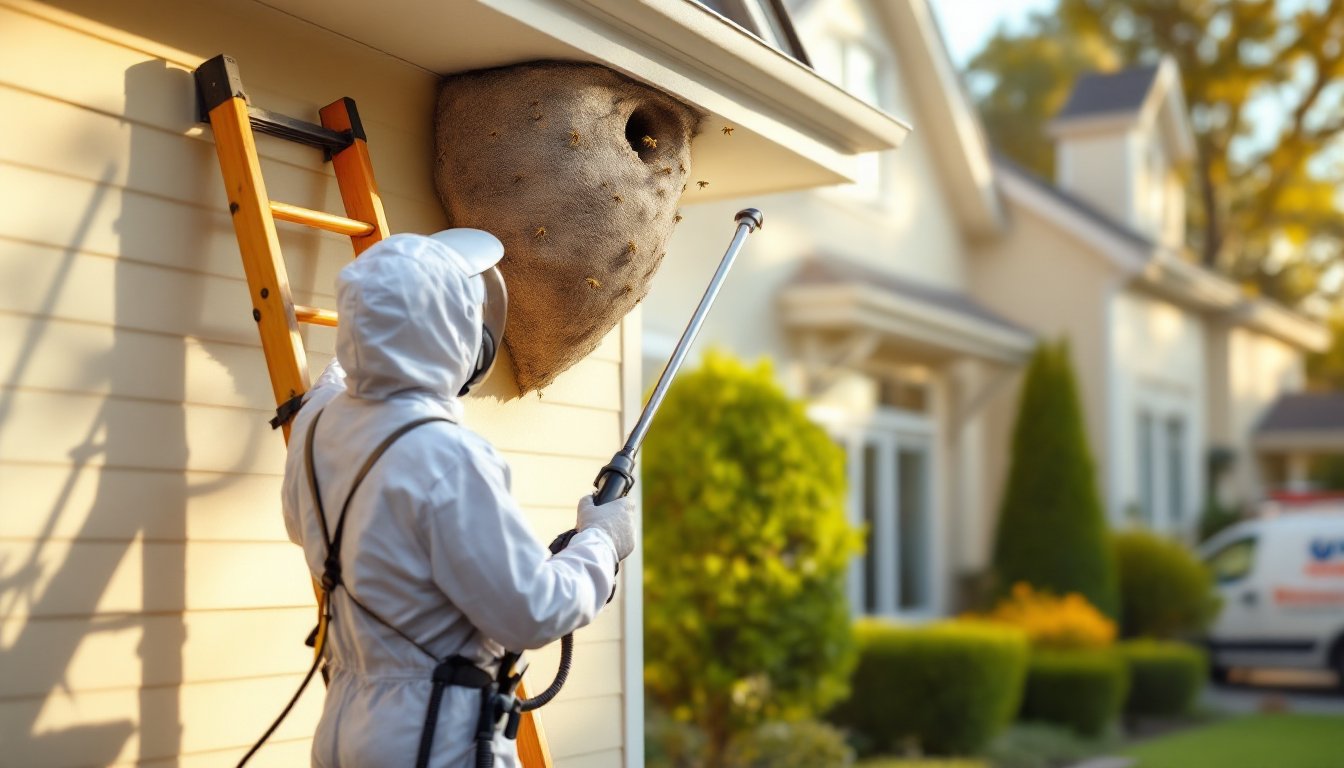
Hornet nests are engineered from chewed wood fibers mixed with saliva, creating a gray or tan papery structure. Early-season nests may be golf-ball-sized, but by late summer, they can grow to basketball-size or larger, containing multiple tiers of hexagonal cells.
The outer shell has a smooth, layered appearance with a single entrance hole near the bottom. This distinguishes hornet nests from paper wasp nests, which are open-celled and umbrella-shaped without an outer covering.
Common Nest Locations and Warning Signs
Hornets prefer protected, elevated locations that offer shelter from weather and easy access to food sources. Common nesting sites include:
- Eaves and soffits: Check under roof overhangs, especially near corners where two walls meet.
- Tree cavities and hollow branches: European hornets often nest inside trees, with workers entering through knotholes or cracks.
- Attics and wall voids: Hornets can enter through vents, gaps in siding, or damaged screens, building nests inside structures.
- Sheds, garages, and outbuildings: Any sheltered space with minimal disturbance is fair game.
- Dense shrubs and hedges: Ground-level or low-hanging nests are less common but possible, particularly in overgrown landscaping.
Warning signs of nearby hornet activity include:
- Increased wasp traffic in a specific area, especially workers flying in a consistent flight path
- Audible buzzing or humming from walls, soffits, or trees
- Chewed wood or bark near suspected nest sites
- Dead insects or larvae debris below nest entrances (hornets discard waste outside)
Inspect your property during early morning or dusk when hornets are less active. Wear long sleeves, pants, and gloves even during reconnaissance, disturbing a nest accidentally can provoke an immediate attack.
DIY Hornet Control Methods That Work
DIY hornet removal is only advisable for small nests (smaller than a tennis ball) located in accessible, outdoor areas. Attempting removal on large nests or those inside structures significantly increases risk and often requires professional intervention.
Timing is everything. Treat nests at dusk or dawn when hornets are inside and less active. Temperature plays a role, hornets are sluggish when it’s below 50°F. Never attempt removal during midday when the colony is fully active.
Safety gear is non-negotiable. Wear a beekeeper’s veil or face shield, heavy gloves, long sleeves, and pants tucked into boots. If you’re allergic to stings, do not attempt DIY removal under any circumstances.
For accessible outdoor nests, aerosol wasp and hornet killers with a 15- to 20-foot spray range are the most effective option. Products like those containing pyrethroids work by paralyzing insects on contact. Stand upwind, aim directly at the entrance hole, and saturate the nest for 10 to 15 seconds. Retreat immediately and wait 24 hours before checking for activity.
If the nest is in a tree cavity or wall void, foaming sprays are more effective. The foam expands into hidden spaces, coating hornets and blocking their exit. Do not seal the entrance hole immediately, trapped hornets may chew through drywall or siding to escape indoors.
For environmentally conscious homeowners, dusts containing diatomaceous earth or silica gel can be applied around nest entrances. These desiccants damage the insects’ exoskeletons, causing dehydration. But, they work more slowly than chemical sprays and require multiple applications.
Best Products and Tools for Homeowners
Aerosol sprays are the go-to for most DIYers. Look for products labeled specifically for hornets and wasps, with a jet-stream nozzle that reaches 15+ feet. Popular active ingredients include tetramethrin, permethrin, and phenothrin.
Foaming sprays work well for enclosed spaces. The foam expands to fill voids, making it ideal for wall cavities, attics, or tree hollows.
Dust insecticides like Tempo Dust or Delta Dust can be applied with a hand duster. These are best for treating voids, cracks, and crevices where nests are hidden.
Protective clothing is a must. A basic beekeeper’s suit costs $30 to $50 and provides full-body coverage. At minimum, wear a thick hoodie, gloves, goggles, and a face shield.
Traps are useful for reducing hornet populations but won’t eliminate a nest. Bait traps with protein (raw meat or fish) in spring when queens are establishing colonies. Switching strategies outlined in professional wasp management guides show that sweet baits (fruit juice, soda) work better in late summer when workers crave sugar.
Never use gasoline, fire, or water to destroy a nest. These methods are ineffective, dangerous, and often illegal under local fire codes.
When to Call a Professional Exterminator
Some hornet situations are beyond DIY capability and require a certified pest control technician. Call a professional if:
- The nest is larger than a softball. Colonies this size contain hundreds of workers and pose serious risk.
- The nest is inside your home. Wall voids, attics, and crawlspaces require specialized equipment and techniques to prevent hornets from escaping into living spaces.
- You’re allergic to stings. Even with an epinephrine auto-injector, the risk isn’t worth taking.
- The nest is high or hard to reach. Rooflines, tall trees, and second-story eaves require ladders and stability that increase fall risk.
- Previous DIY attempts failed. If hornets have rebuilt or relocated after treatment, professionals can identify the root cause.
Professional exterminators use commercial-grade insecticides unavailable to consumers, along with specialized application equipment like dusters, foggers, and extension poles. Many also offer same-day or next-day service during peak season (July through September), which is critical when hornets pose an immediate threat.
Cost varies by region and nest complexity. Expect to pay $150 to $400 for standard hornet removal, with prices climbing to $500+ for nests inside structures or requiring wall removal. Many companies include a warranty, returning at no charge if hornets reappear within 30 days.
When hiring, verify the company is licensed and insured. Ask if they’re experienced with hornets specifically, some pest control companies focus primarily on ants, roaches, or rodents. Ensure they carry liability insurance and workers’ compensation coverage in case of accidents on your property.
Reputable providers often appear on platforms like HomeAdvisor, where you can compare reviews, pricing, and availability. For comprehensive pest management needs, services specializing in wildlife pest control may also handle hornet removal alongside other outdoor pest issues.
Preventing Future Hornet Infestations
Prevention starts in early spring when queens emerge from winter dormancy to establish new colonies. A single queen can produce an entire nest by summer, so early detection and exclusion are critical.
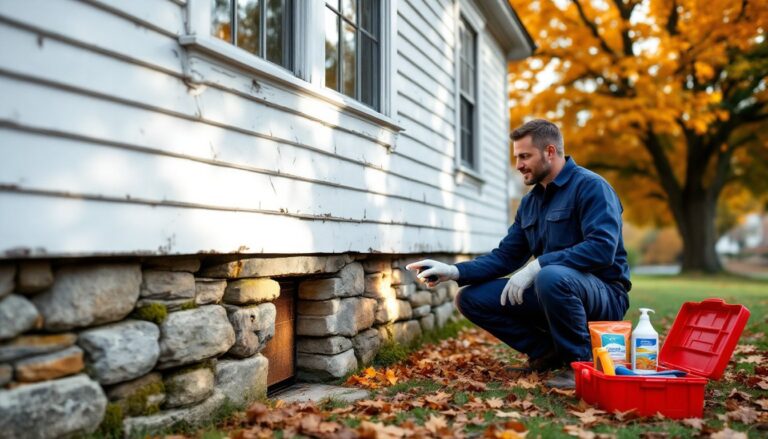
Seal entry points. Walk your home’s perimeter and inspect for gaps, cracks, and openings. Hornets can enter through:
- Damaged soffit vents or missing screens
- Gaps around utility penetrations (pipes, cables, conduit)
- Cracks in siding or masonry
- Torn window screens or loose weatherstripping
Use caulk for cracks smaller than 1/4 inch, expanding foam for larger gaps, and galvanized steel mesh for vents and openings that need airflow.
Eliminate food sources. Hornets hunt other insects for protein, so reducing pest populations around your home makes it less attractive. Keep trash cans tightly sealed, clean up fallen fruit, and remove standing water where insects breed. Outdoor dining areas should be cleaned immediately, food scraps and sugary drinks attract foraging workers.
Set early-season traps. In April and May, place hornet traps near previous nest sites or high-traffic areas. Baiting with protein (tuna, chicken) targets queens before they establish colonies. For additional approaches, DIY pest control methods often recommend strategic trap placement around sheds, decks, and other sheltered areas.
Remove old nests. Hornets don’t reuse old nests, but their presence can attract new queens looking for shelter. Wait until winter when the colony has died off, then knock down and dispose of abandoned nests. Wear gloves and a mask, dried nest material can contain allergens and pathogens.
Maintain landscaping. Overgrown shrubs, dense hedges, and ivy-covered walls provide ideal nesting sites. Keep vegetation trimmed back at least 6 inches from structures, and prune tree branches that overhang rooflines.
Reduce exterior lighting. Hornets are attracted to light at night. Use yellow or amber bulbs in porch lights and motion sensors instead of always-on fixtures. This reduces insect activity around entry points, making your home less appealing to hunting hornets.
By combining exclusion, sanitation, and monitoring, homeowners can significantly reduce the likelihood of hornet infestations and catch problems early when they’re easiest to address.