A car is more than just transportation, it’s a mobile shelter that attracts all sorts of uninvited guests. Mice chewing through wiring harnesses, ants colonizing floor mats, wasps building nests in side mirrors: these aren’t rare horror stories, they’re common problems that cost vehicle owners hundreds or even thousands in repairs. Pests infiltrate cars parked in driveways, garages, and street parking alike, drawn by warmth, shelter, and the surprising buffet of materials modern vehicles provide. This guide covers why pests target vehicles, how to spot an infestation early, and proven DIY methods to keep rodents, insects, and other critters out of the cabin and engine bay.
Table of Contents
ToggleKey Takeaways
- Car pest control requires understanding that pests are attracted to vehicles for warmth, shelter, and food sources like soy-based wiring insulation and forgotten food crumbs.
- Early detection of infestations through visual signs (droppings, shredded insulation), odors (ammonia-like urine smell), and operational issues (dashboard warning lights, unusual noises) prevents costly repairs exceeding $1,000.
- Physical barriers like ¼-inch hardware cloth over air vents, weatherstripping replacement, and regular vehicle operation are the most effective DIY prevention methods for car pest control.
- Natural repellents such as peppermint oil-soaked cotton balls, dryer sheets, and pepper-based treatments offer supplementary protection when refreshed regularly.
- Quick removal using snap traps, diatomaceous earth for ants, and proper safety precautions (N95 mask, gloves) stops active infestations before they cause electrical or structural damage.
- Vehicle pest control success depends on ongoing vigilance: regular inspections, interior cleanliness, and immediate action when evidence appears prevent expensive long-term infestations.
Why Pests Are Attracted to Your Car
Vehicles offer three things pests actively seek: warmth, shelter, and food. Engine compartments retain heat long after shutdown, making them prime real estate for rodents and insects during cold months. The maze of hoses, wiring, and insulation provides nesting material and concealment from predators.
Modern wiring insulation often contains soy-based compounds, an unintended snack bar for mice and rats. They’ll gnaw through harnesses not just for food, but to file down continuously growing incisors. A single mouse can cause $1,000+ in electrical damage in a matter of days.
Food crumbs, drink spills, and even air fresheners create scent trails that draw ants, roaches, and flies. Parking near trash bins, compost piles, or under trees increases exposure to foraging insects and nesting birds. Cars parked infrequently or stored long-term are especially vulnerable, pests interpret stillness as safety.
Common Pests That Infest Vehicles
Mice and rats are the most destructive vehicle pests. They enter through engine bay gaps as small as ¼ inch, nest in air filter housings and blower motor compartments, and shred upholstery for bedding. Their urine corrodes metal and leaves a persistent ammonia smell.
Ants infiltrate through door seals and ventilation systems, often establishing colonies inside door panels or under seats. Professional ant removal requires eliminating the queen, not just surface workers.
Wasps and hornets build paper nests in side mirrors, grilles, and undercarriages. Disturbing an active nest while driving creates a dangerous distraction. Yellow jackets are particularly aggressive and will defend nests aggressively.
Spiders spin webs across mirrors and in wheel wells, while roaches hide in dashboard vents and glove boxes. Both thrive in humid climates and vehicles with food residue. Squirrels and chipmunks occasionally stash acorns in engine bays, creating fire hazards near hot components.
Signs Your Car Has a Pest Problem
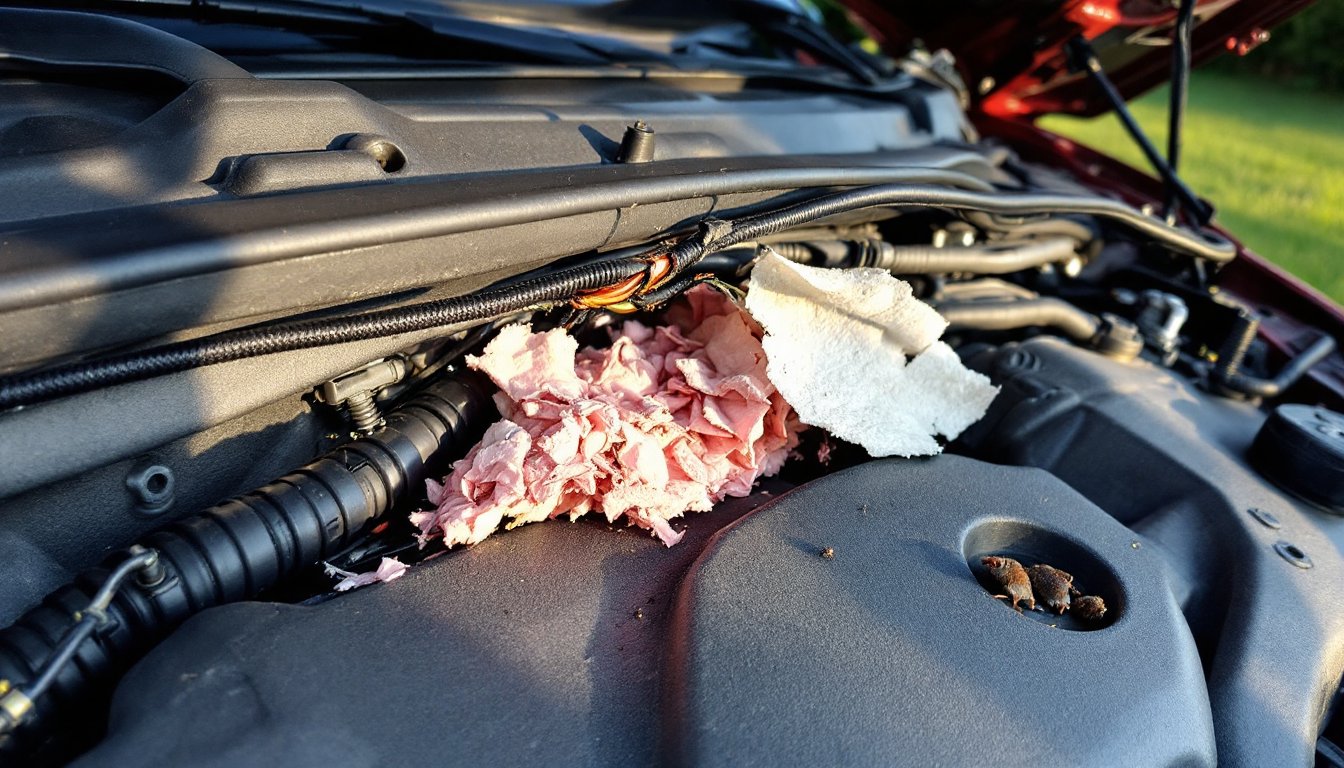
Visual evidence is the clearest indicator. Look for droppings, mouse pellets are rice-sized and dark: rat droppings are larger and capsule-shaped. Shredded insulation, paper, or fabric signals nesting activity. Check the engine bay with a flashlight for chewed wires with exposed copper, gnawed hoses, or acorn caches.
Odors provide another clue. A strong urine smell (ammonia-like) indicates rodent activity, while musty or rotten scents suggest dead pests in ventilation ducts. Run the blower fan and sniff the vents, decomposing rodents trapped in the HVAC system produce unmistakable smells.
Operational issues often follow infestations. Dashboard warning lights may illuminate if wiring is damaged. Blower fans make scraping noises when nest material obstructs the motor. Steering feels loose if rodents chew through rubber boots on tie rods. Check engine codes immediately if the check engine light appears after parking in a pest-prone area. Many wildlife pest control specialists can inspect vehicles for hidden damage.
DIY Prevention Methods to Keep Pests Out
Physical barriers are the first line of defense. Install ¼-inch hardware cloth over air intake vents and other large engine bay openings. Check weatherstripping around doors, trunk, and hood for gaps, replace worn seals with automotive-grade rubber. Park on gravel or concrete rather than grass: rodents dislike crossing open surfaces.
Keep the interior spotless. Vacuum floor mats weekly, wipe down surfaces to remove food oils, and store nothing edible inside, even unopened packages attract pests. Remove trash immediately: a forgotten fast-food bag can start an infestation.
Electronic deterrents like ultrasonic repellers plug into 12-volt outlets and emit high-frequency sounds that annoy rodents. Effectiveness varies, some users report success while others see no change. Battery-operated strobe lights placed in the engine bay disorient nocturnal pests but drain batteries if left connected long-term.
Run the vehicle regularly. Starting the engine every 2-3 days keeps compartments too hot for nesting and signals occupancy. Open the hood during the day when parking at home, sunlight and visibility discourage den-building. For long-term storage, disconnect the battery and place the vehicle on jack stands to reduce appeal.
Natural Repellents and Deterrents
Peppermint oil is a popular rodent repellent. Soak cotton balls in pure peppermint essential oil (not fragrance oil) and place them in the engine bay, trunk, and cabin. Refresh weekly, effectiveness drops as the scent fades. Some find success with similar treatments for tick prevention in outdoor areas.
Dryer sheets tucked into air filters and under seats may deter mice: anecdotal evidence supports this, though scientific backing is limited. Use unscented sheets to avoid overwhelming cabin air.
Predator urine granules (coyote or fox) sprinkled around parking areas trigger rodents’ survival instincts. Reapply after rain. This method works best in garages or carports where application is contained. Methods like boric acid treatments work for home pest control but aren’t suitable for vehicles due to moisture and confined spaces.
Cayenne pepper or black pepper sprinkled in the engine bay irritates rodent noses and paws. Avoid contact with belts and hoses, as capsaicin can degrade rubber over time. Reapply monthly or after washing the vehicle.
How to Remove Pests from Your Car
Safety first: Wear nitrile gloves and an N95 respirator when handling rodent droppings or nests. Hantavirus, spread through aerosolized rodent urine, is rare but serious. Don’t vacuum droppings dry, spray with a 10% bleach solution, let sit for five minutes, then wipe with disposable towels.
For active rodent infestations, set snap traps in the engine bay and cabin. Use peanut butter or nesting material as bait. Position traps along walls and near evidence of activity, rodents travel established routes. Check traps daily. Glue traps are less humane and trap non-target animals: avoid them.
Live-catch traps work for squirrels and larger rodents but require prompt release at least two miles away to prevent return. Check local regulations, relocating wildlife is illegal in some jurisdictions. Services offering certified pest control can handle removal within legal guidelines.
To eliminate ant colonies, locate the entry point, usually door seals or trunk weatherstripping. Apply diatomaceous earth (food-grade) along seals and in door jambs. The powder abrades insects’ exoskeletons, causing dehydration. For large infestations inside panels, ant bait stations draw workers back to the colony, poisoning the queen.
Wasp nest removal requires caution. Spray nests at dusk when insects are less active, using wasp-specific aerosol from 15-20 feet away. Wear long sleeves, pants, and goggles. If the nest is inside a mirror or grille, remove the component if possible before spraying. Never attempt removal while the vehicle is running or recently driven, heat agitates wasps.
Clean the HVAC system after infestation. Run the blower on high with windows open to expel loose debris. If smells persist, remove the cabin air filter (usually behind the glove box) and inspect for nesting material. Replace the filter, OEM or quality aftermarket brands like Bosch or Mann-Filter restore airflow and eliminate odors. For deep contamination, professionals can fog the system with enzyme-based cleaners. Many pest control operations, similar to local specialists, offer vehicle sanitation services.
Conclusion
Vehicle pest control isn’t a one-time fix, it’s ongoing vigilance. Regular inspections, cleanliness, and physical barriers stop most infestations before they start. Address evidence immediately: a few droppings today become costly wiring damage tomorrow. With consistent preventive measures and quick action when pests appear, any vehicle owner can keep their car free of unwanted passengers.