Gilbert’s desert location and booming residential growth create the perfect storm for pest problems. Homeowners here deal with creatures most Americans never see, bark scorpions lurking in block walls, subterranean termites chewing through framing, and desert-adapted spiders that think your garage is prime real estate. Unlike humid regions where pests cycle seasonally, Arizona’s dry climate keeps many species active year-round. Understanding which threats are cosmetic nuisances versus structural risks helps homeowners decide when a DIY approach works and when it’s time to bring in licensed pros with commercial-grade tools.
Table of Contents
ToggleKey Takeaways
- Gilbert’s year-round warm climate and low humidity keep pests like bark scorpions and termites active when they would be dormant elsewhere, requiring desert-specific Gilbert pest control strategies.
- Exclusion and sealing gaps (caulking, copper mesh, door sweeps) is the most cost-effective long-term pest prevention method, especially critical since scorpions can flatten bodies to fit through 1/16-inch openings.
- Bark scorpions fluoresce under UV blacklight, making monthly inspections during warm months (April–October) an effective way to identify infestations before they require professional intervention.
- Subterranean termite treatment and wood-destroying insect inspections require licensed professionals due to complex foundation types like post-tension slabs, where improper drilling can cause structural failure.
- When choosing a Gilbert pest control company, verify Arizona Structural Pest Control Commission licensure, ask detailed questions about treatment methods and warranties, and prioritize integrated pest management (IPM) principles over price alone.
Why Gilbert Homeowners Face Unique Pest Challenges
The East Valley’s low humidity and warm winters mean pests don’t die off when temperatures drop. Bark scorpions, the only medically significant species in Arizona, stay active in 70°F weather that would send most insects into dormancy elsewhere. Development patterns compound the issue: new construction displaces desert wildlife directly into existing neighborhoods, and the proliferation of stucco homes with weep screeds, block wall fencing, and decorative rock landscaping creates countless harborage points.
Irrigation systems designed for desert landscaping also create moisture gradients that attract termites and roaches. A drip line running along a foundation provides both water and shelter, exactly what subterranean termites need to establish colonies. Add in the fact that many Gilbert homes sit on post-tension slab foundations (making traditional chemical barrier treatments more complex), and you’ve got a pest control scenario that requires desert-specific knowledge.
Gilbert’s municipal code requires termite inspections for property transfers, but there’s no ongoing monitoring mandate for homeowners. That means infestations often go unnoticed until damage is visible, at which point repair costs can run into five figures. The Arizona Structural Pest Control Commission licenses all commercial applicators, but homeowners can legally apply most pesticides themselves with proper PPE and label compliance.
Most Common Pests in Gilbert and How to Identify Them
Scorpions and Spiders
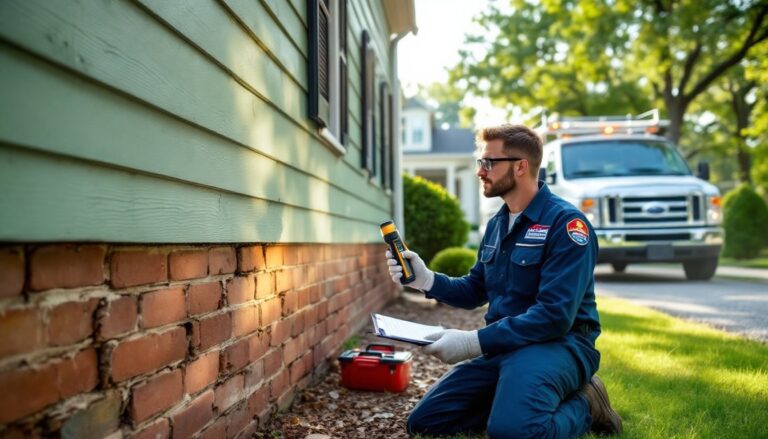
Bark scorpions (Centruroides sculpturatus) are the big concern. They’re straw-colored, slender, and measure 2–3 inches including the tail. Unlike other scorpions, bark scorpions can climb stucco and wood, they’re often found on interior walls at night. Their sting causes severe pain, numbness, and in rare cases (young children, elderly, or allergic individuals), respiratory distress requiring medical attention. Use a blacklight flashlight after dark: scorpions fluoresce bright blue-green under UV light, making inspection much easier.
Black widows thrive in block wall voids, irrigation valve boxes, and storage sheds. Females have the distinctive red hourglass marking and build irregular, funnel-shaped webs low to the ground. Desert recluse spiders are less common than their brown recluse cousins but present in Gilbert. They’re tan with a violin-shaped marking on the cephalothorax. Bites from either species can cause necrotic wounds and require medical evaluation. When clearing storage areas, wear leather gloves and shake out any items that have been undisturbed for weeks.
Most spider control methods used by professionals rely on boric acid applications in cracks and crevices where spiders harbor during daylight hours.
Termites and Wood-Destroying Insects
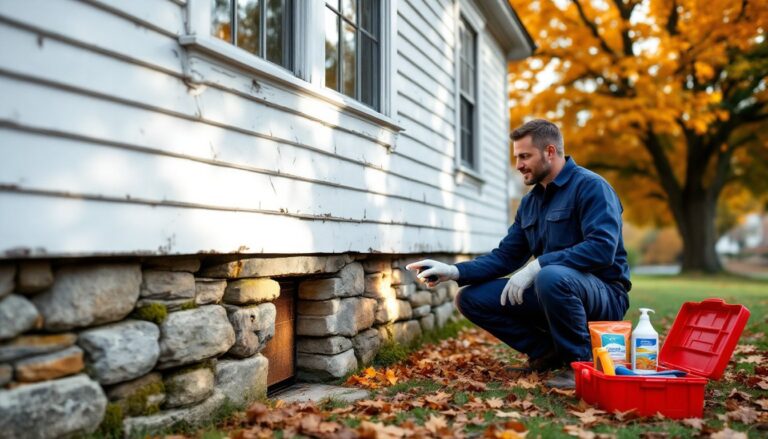
Subterranean termites are the structural threat. They build mud tubes (about pencil-width) from soil to wood, bypassing masonry and concrete. Check along foundation edges, inside crawl spaces (if applicable), and around plumbing penetrations. Swarmers, winged reproductives, emerge in spring, often mistaken for flying ants. The key difference: termites have straight antennae, equal-length wings, and a thick waist: ants have elbowed antennae, unequal wings, and a pinched waist.
Drywood termites infest attic framing and sometimes furniture. They leave behind fecal pellets (frass) that look like tiny grains of sand or sawdust, usually found in small piles below exit holes. Drywood infestations spread slowly but are harder to treat, whole-structure fumigation (tenting) is often required for widespread infestations.
Arizona law requires licensed applicators to carry at least $100,000 in liability coverage and follow label directions on all restricted-use pesticides. Homeowners tackling certified pest control methods need to verify product registration with the Arizona Department of Agriculture.
DIY Pest Control Methods That Actually Work
Start with exclusion, it’s the most effective long-term strategy and requires zero pesticides. Seal weep screed openings with copper mesh (steel wool rusts out in a season): caulk gaps around plumbing and electrical penetrations with polyurethane or silicone caulk: install door sweeps with a maximum ¼-inch gap. Scorpions can flatten their bodies to slip through gaps as narrow as 1/16 inch, so attention to detail matters.
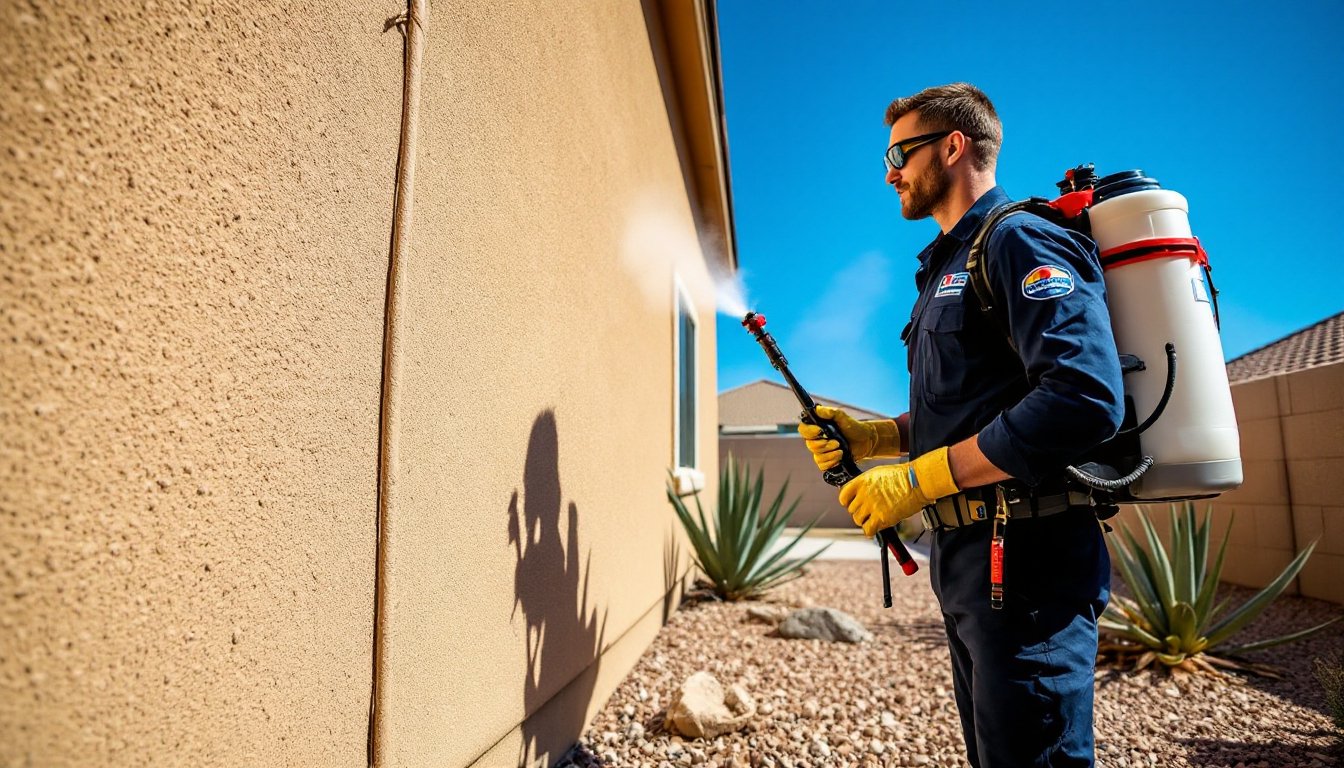
For perimeter treatment, wettable powder formulations of synthetic pyrethroids (like bifenthrin or cyfluthrin) create a barrier when applied to foundation walls, door thresholds, and window frames. Mix according to label directions, typically 0.5–1 oz per gallon of water, and apply with a pump sprayer equipped with a fan nozzle. Spray 3 feet up the foundation and 3 feet out onto hardscape or gravel. Reapply every 60–90 days or after heavy rain. Wear nitrile gloves, safety glasses, and a dust mask during mixing and application.
Granular baits work well for ants and roaches. Broadcast Amdro or Advion granules around the perimeter (not directly on plants) and lightly water in. For scorpions, consider dusting with diatomaceous earth (food-grade, not pool-grade) in wall voids, attic spaces, and crawl areas. DE works mechanically, it damages the exoskeleton and causes dehydration, but takes days to weeks for effect.
Homeowners researching effective treatments often reference guides from The Spruce for detailed pest identification and DIY application tips. UV blacklight inspections should be done monthly during warm months (April–October). Mark any scorpion sightings on a property map to identify hot spots. If you’re finding more than two scorpions per month indoors, DIY methods probably aren’t cutting it.
When to Call a Professional Pest Control Service
Bring in a licensed service when pests are inside living spaces regularly, when you’ve identified structural damage, or when the species involved poses medical risk. Bark scorpion infestations warrant professional treatment, pros use microencapsulated formulations and can treat overhead areas (eaves, attic penetrations) that homeowners can’t safely reach. They also have access to powered duster equipment for applying insecticidal dust deep into block wall voids.
Termite treatment is another clear professional job. Subterranean termite control often involves trenching and rodding to create a continuous chemical barrier in the soil around and under the foundation. On post-tension slabs, this requires drilling through the concrete at 12-inch intervals and injecting termiticide under pressure, work that demands specialized equipment and knowledge of slab construction. Drilling into post-tension cables can cause catastrophic structural failure. Never attempt foundation drilling without knowing cable locations.
Professional services also make sense for whole-property treatments. If scorpions are a persistent problem, a comprehensive program might include interior crack-and-crevice treatment, attic dusting, exterior barrier application, and monthly monitoring. Some companies offer blacklight inspections as part of the service package. Pricing for monthly residential service in Gilbert typically runs $50–$125 per visit depending on property size and treatment scope, according to cost data from HomeAdvisor.
If you’re dealing with wood-destroying insects, Arizona law requires a Wood-Destroying Insect Inspection Report (WDIIR) for real estate transactions. Only licensed applicators can issue these reports. When comparing providers, look for those who follow integrated pest management (IPM) principles, using the least-toxic effective methods first and escalating only when necessary.
Choosing the Right Pest Control Company in Gilbert
Start by verifying licensure with the Arizona Structural Pest Control Commission (available online). Every applicator should carry a pocket license and provide their license number on service agreements. Ask whether the company is QualityPro certified through the National Pest Management Association, it’s a voluntary credential that requires ongoing training, insurance verification, and compliance audits.
Get quotes from at least three companies, but don’t choose based solely on price. A low monthly rate often means generic spray-and-pray service with no customization. Ask specific questions: What active ingredients do you use? How do you treat block walls? Do you offer attic dusting? What’s your re-service policy if pests return between visits? A quality company will provide a written service agreement detailing treatment areas, products used, and any warranty or guarantee terms.
Check reviews, but dig deeper than star ratings. Look for mentions of responsiveness, technician knowledge, and follow-through on callbacks. Many top-rated pest control specialists in Gilbert have years of desert-specific experience and can tailor programs to your home’s construction type and landscaping.
If the company recommends ongoing monthly service, ask whether that’s truly necessary or if quarterly treatments with DIY maintenance in between would suffice. Honest companies will tell you that once an infestation is knocked down, many homeowners can maintain control with less frequent professional visits, especially if they’re diligent about exclusion and perimeter treatments. Some services combine professional expertise with homeowner education, similar to how regional pest control providers approach integrated management in other climates.
Finally, confirm that technicians will communicate findings. A good service includes documentation of pest activity, treatment locations, and recommendations for structural repairs or landscape modifications that reduce harborage. You’re not just paying for chemicals, you’re paying for knowledge and problem-solving.