Anyone who’s spent time around horses knows that pests aren’t just a nuisance, they’re a real threat to animal health and stable operations. Flies swarm in summer heat, mosquitoes spread disease, and ticks lurk in tall grass waiting to latch on. Left unchecked, these pests cause everything from minor irritation to serious illness, weight loss, and behavioral issues in horses. Effective pest control requires a combination of physical barriers, habitat management, and targeted treatments. This guide walks through the most common stable and pasture pests, then lays out practical DIY solutions that horse owners can carry out without calling in professionals for routine control.
Table of Contents
ToggleKey Takeaways
- Effective horse pest control combines sanitation, habitat management, and targeted treatments to prevent disease transmission and improve animal health and comfort.
- Daily manure removal and dry bedding are the most critical DIY pest control measures, as flies complete their life cycle in just seven days under ideal conditions.
- Install barn fans at shoulder height to create fly-free zones where horses can rest, as flies cannot land in airflow above 2-3 mph.
- Pasture management including regular mowing, elimination of standing water, and grazing rotation significantly reduce mosquitoes, ticks, and fly populations without relying solely on chemicals.
- When using topical fly sprays or spot-on treatments, choose horse-safe, permethrin-based products and rotate active ingredients seasonally to prevent pest resistance.
- Biological controls like fly predators (parasitic wasps) and beneficial wildlife such as barn swallows and bats provide sustainable, chemical-free pest reduction when released early in the season.
Why Pest Control Matters for Horse Health and Comfort
Pest pressure does more than annoy horses, it directly impacts their well-being and performance. Constant fly irritation causes stress, leading to weight loss, interrupted feeding, and sleep deprivation. Horses stamp, tail-swish, and head-shake constantly when flies are bad, burning calories and increasing injury risk from thrashing.
Beyond discomfort, pests transmit disease. Mosquitoes carry West Nile virus and Eastern Equine Encephalitis (EEE), both potentially fatal to horses. Ticks spread Lyme disease and Anaplasmosis. Stable flies and horse flies deliver painful bites that create open wounds, inviting secondary bacterial infections. Bot flies lay eggs on horse legs and shoulders: when horses lick themselves, they ingest larvae that develop in the stomach lining, causing ulcers and colic.
Good pest control also protects barn infrastructure. Fly populations explode in manure and wet bedding, creating sanitation nightmares and attracting rodents. Keeping pest numbers down makes daily stable chores easier and reduces veterinary bills. It’s preventive maintenance that pays off in healthier, calmer horses and a cleaner operation overall.
Common Pests That Threaten Horses and Stables
Flies: The Most Persistent Horse Pests
House flies and stable flies are the most common barn pests. House flies don’t bite, but they cluster around eyes, nose, and wounds, spreading bacteria and causing irritation. Stable flies, which look similar but have a prominent proboscis, deliver painful bites on legs and bellies. Both species breed in manure, soiled bedding, and wet feed.
Horse flies and deer flies are larger, more aggressive biters. They slash skin to lap up blood, leaving painful welts that can become infected. These flies breed in wetland edges and damp soil, making pastures near creeks or ponds especially problematic. Bot flies don’t bite, but their life cycle is insidious: adults lay yellow eggs on horse hair, larvae hatch when licked, then migrate to the stomach where they attach and feed for months.
Face flies congregate around horses’ eyes and muzzles, feeding on secretions and tears. They’re a primary vector for pinkeye (conjunctivitis) and can drive horses crazy with constant buzzing and crawling. Fly populations peak in summer but start building in spring, so control efforts need to begin early. Many experienced horse owners combine wildlife pest control tactics with stable-specific treatments to address the full ecosystem.
Mosquitoes, Ticks, and Mites
Mosquitoes breed in standing water, troughs, puddles, clogged gutters, and feed at dawn and dusk. They’re the primary vector for West Nile and EEE, diseases that can cause neurological damage or death in horses. Vaccination is essential, but reducing mosquito habitat and using repellents adds critical layers of protection.
Ticks wait in tall grass and brush, latching onto horses (and handlers) as they pass. Plus to Lyme disease, ticks transmit Anaplasmosis and can cause tick paralysis in severe infestations. Tick pest control around pasture edges and trails is crucial, especially in wooded or overgrown areas.
Mites cause mange, a skin condition that leads to intense itching, hair loss, and crusty lesions. Chorioptic mange affects lower legs and is common in horses with heavy feathering. Sarcoptic mange is less common but highly contagious and requires veterinary treatment. Mites spread through direct contact and shared tack, so quarantine new arrivals and disinfect equipment regularly.
Effective DIY Pest Control Solutions for Your Stable
Start with sanitation, the single most effective DIY pest control measure. Remove manure from stalls daily and from paddocks at least twice weekly. Flies can complete their life cycle in as little as seven days under ideal conditions, so breaking that cycle is critical. Spread manure in thin layers in a designated area away from the barn, or compost it properly: active composting generates heat that kills fly larvae.
Keep bedding dry. Wet spots in stalls create perfect breeding grounds for stable flies. Use rubber stall mats under bedding to improve drainage and make mucking easier. Fix leaky waterers and roof drains immediately. Store feed in sealed metal or heavy plastic bins, not only does this deter rodents, but it also eliminates a moisture source that attracts flies.
Fly traps and tapes work well when deployed strategically. Sticky tapes hung from rafters catch house flies. Baited jug traps attract and drown flies outside the barn, place them at least 20 feet downwind so you’re not drawing flies toward horses. UV bug zappers have limited effectiveness for horse flies and stable flies, which are more attracted to carbon dioxide and movement than light.
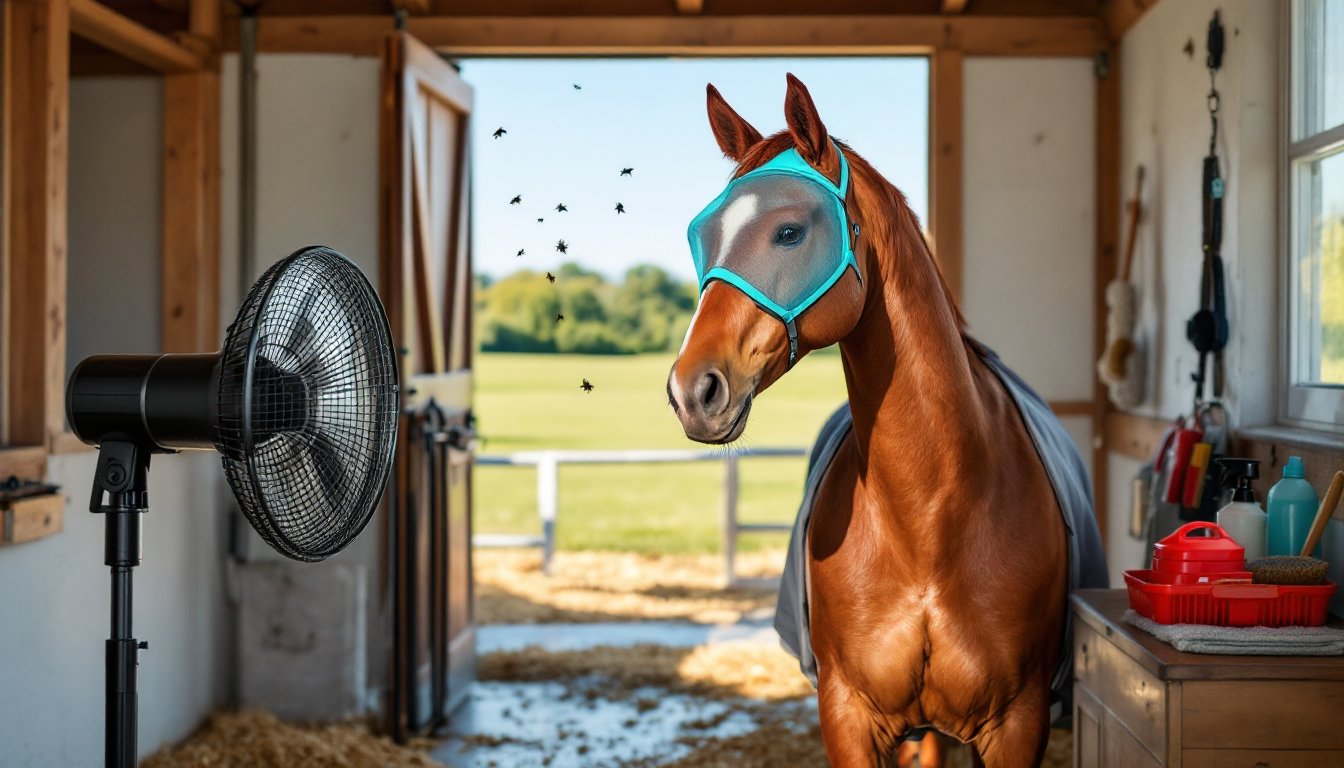
Install fans in stalls and barn aisles. Flies struggle to land in airflow above 2-3 mph, and fans also help dry bedding and reduce humidity. Use heavy-duty barn fans mounted at horse shoulder height, angled slightly downward. This creates a fly-free zone where horses can eat and rest in peace. According to guidance from The Spruce, proper ventilation is a cornerstone of barn management that benefits both pest control and respiratory health.
Fly predators (parasitic wasps) are a biological control option. These tiny wasps lay eggs in fly pupae, preventing adult flies from emerging. Release them every 3-4 weeks from spring through fall, following package directions based on horse count. They’re harmless to horses, people, and pets, and they work best when started early in the season before fly populations explode.
For horses, fly masks and fly sheets provide physical barriers. Choose masks with ear covers for face fly protection. Lightweight mesh sheets cover the body without causing overheating. These are especially useful for horses turned out during peak fly hours. Some owners also use boric acid pest control methods in barn corners and storage areas to manage crawling insects like roaches and ants without risking horse exposure.
Pasture Management Strategies to Reduce Pest Populations
Pasture management directly affects pest pressure. Mow pastures regularly to reduce tall grass where ticks and mosquitoes hide. Keep grass height at 3-4 inches, short enough to discourage pests, tall enough to maintain healthy root systems. Mow field edges and fence lines where horses don’t graze: these areas become tick havens if left unmanaged.
Eliminate standing water. Walk pastures after rain and fill in low spots that collect puddles. Drill drainage holes in old tires or remove them entirely, a single tire can breed hundreds of mosquitoes. Clean water troughs weekly, scrubbing off algae and biofilm. Automatic waterers should have sealed reservoirs: open tanks need regular dumping and refilling.
Rotate grazing to break parasite and pest cycles. Moving horses to fresh pasture every 2-4 weeks reduces parasite load and gives manure time to dry and break down, killing fly larvae. If space is limited, harrow pastures during dry, sunny weather to scatter manure and expose larvae to desiccation and predators. Harrowing during wet weather spreads parasites without killing them, timing matters.
Manage pasture edges and wooded buffer zones. Create a 3-foot mowed barrier between tall vegetation and grazed areas to reduce tick encounters. Deer are major tick hosts, so fencing or landscaping that discourages deer loitering near pastures helps. Remove brush piles, fallen logs, and overgrown shrubs where rodents nest, rodents also carry ticks.
Consider beneficial insects and wildlife. Barn swallows, purple martins, and bats consume massive quantities of flying insects. Install swallow shelves under barn eaves and bat boxes on outbuilding walls. Don’t use broad-spectrum insecticides that kill beneficials along with pests. Certified pest control professionals can advise on selective treatments when needed, but for routine pasture management, habitat modification beats chemical reliance.
For property owners dealing with multiple pest issues, resources like Family Handyman offer practical guidance on building bat houses, repairing fencing, and implementing drainage solutions that support overall pest reduction strategies.
Safe Chemical and Natural Pest Control Products for Horses
When selecting pest control products for use around horses, read labels carefully. Not all livestock products are horse-safe. Horses are more sensitive than cattle to certain insecticides, particularly organophosphates and pyrethroids at high concentrations.
Topical fly sprays are the most common chemical control. Look for permethrin-based sprays labeled for horses: concentrations typically range from 0.5% to 1%. Apply daily before turnout, focusing on legs, belly, face (avoiding eyes), and other landing zones. Wipe-on formulas work better for head-shy horses. Sprays last 2-4 hours in hot weather or when horses are sweating heavily, reapplication is often necessary.
Feed-through fly control uses insect growth regulators (IGRs) that pass through manure and prevent fly larvae from developing. Products containing methoprene or diflubenzuron are common. Start feeding these in early spring and continue through fall. They don’t kill adult flies, so combine them with other methods. Follow dosing instructions carefully based on horse weight.
Spot-on treatments applied to the poll or shoulders provide longer-lasting protection, some formulations work for up to two weeks. These typically contain cypermethrin or other synthetic pyrethroids. They’re convenient for horses that hate being sprayed, but make sure handlers wear gloves during application and keep horses separated until the product dries to prevent grooming-related ingestion.
For natural alternatives, essential oil-based sprays use citronella, eucalyptus, tea tree, and cedar oils as active ingredients. Effectiveness varies, and they generally require more frequent reapplication than synthetic products. Some horses develop skin sensitivity to essential oils, so test on a small area first. Garlic supplements, fed daily, are claimed to repel insects through skin secretions, though scientific evidence is mixed. Anecdotal reports from horse owners vary widely.
Premise sprays for stalls and barn aisles should be applied when horses are out. Use products labeled for horse facilities, avoid household bug sprays that may contain ingredients toxic to horses. Focus on walls, rafters, stall corners, and other resting spots for flies. Allow treated areas to dry completely before returning horses, and ensure adequate ventilation.
When dealing with ticks, check horses daily, especially after trail rides or pasture time. Remove attached ticks with fine-tipped tweezers, grasping close to the skin and pulling straight out without twisting. Don’t use folk remedies like petroleum jelly or heat, they don’t work and may cause the tick to regurgitate pathogens into the bite wound. For persistent tick problems, consult a veterinarian about equine-safe topical repellents.
Always store pest control products in a locked cabinet away from feed and bedding. Follow PPE recommendations on labels, many products require gloves, and some recommend masks during application. Keep records of what you’ve used and when, especially if multiple people care for horses. Product rotation helps prevent pest resistance: don’t use the same active ingredient year-round if effective alternatives exist. Resources like Country Living often feature farm and stable management tips that complement traditional pest control guidance, covering everything from barn layout to seasonal preparation.